The Alchemy of the Discarded: Nobility in the Mundane
23 March 2026
True luxury no longer demands pristine materials, but rather a profound philosophical resurrection. By transforming urban detritus into brutalist masterpieces, modern artisans forge a new aesthetic of impermanence and mindful elevation.
Historically, the zenith of high craft was unequivocally defined by the rarity, extraction, and absolute purity of its materials. The lexicon of luxury spoke in the dialect of flawless jade, virgin timber felled from ancient forests, pure gold pulled from the deep earth, and unblemished silk woven under exacting conditions. The intrinsic value of an object was inexorably tied to the exclusivity and the pristine nature of its physical components. To possess luxury was to possess the untouched, the uncorrupted, and the scarce. However, a profound and necessary shift is currently occurring within the hushed sanctuaries of contemporary ateliers—a quiet revolution that fundamentally rejects the traditional, extractive hierarchy of materials. Guided by a contemporary interpretation of Buddhist philosophy, a deep reverence for the cyclical nature of existence, and an inescapable environmental anxiety, today’s visionary makers are turning their discerning attention to the overlooked, the discarded, and the entirely mundane. They are engaging in a modern, urgent alchemy, transforming industrial waste, agricultural byproducts, and the sprawling detritus of urbanity into objects of undeniable nobility and silent, thought-provoking luxury.
This paradigm shift is rooted deeply in the ancient aesthetic and philosophical tenets of wabi-sabi, the Japanese worldview centered on the acceptance of transience and imperfection. Where traditional luxury demands an illusion of permanence and an eternal, unchanging perfection, this new movement embraces the inevitable decay and the beautiful vulnerability of matter. It asks us to confront the reality of impermanence—the fundamental Buddhist concept of anicca—acknowledging that all things are in a constant state of flux. By choosing materials that have already experienced a 'death' in their lifecycle, these artisans are engaging with mono no aware, a profound, empathetic awareness of the pathos of things. The discarded plastic or the shattered concrete is no longer seen as an end-state of failure, but rather as a poignant testament to the fleeting nature of human utility and desire. In this framework, the mundane is elevated precisely because it bears the scars of time and use, offering a philosophical depth that virgin materials simply cannot possess.
This approach, therefore, is not simply about the modern trend of 'upcycling' or a superficial, market-driven eco-friendliness; it is a deep, rigorous philosophical inquiry into the very lifecycle of matter itself. When an artist ventures out to gather discarded polymer plastics, crushed industrial glass, exhausted coffee grounds, oxidized scrap metal, or the heavy architectural rubble of recently demolished buildings, they are not merely foraging for cheap supplies. They are acting as archivists, collecting the physical memories of human consumption and the sediment of the Anthropocene. In their raw, abandoned state, these materials are universally considered worthless, stripped of their original utility and relegated to the invisible shadows of our societal periphery. They represent the 'yin'—the dark, the discarded, the dormant. The artisan’s monumental task is to introduce the 'yang' of active creation, to resurrect these dormant elements and grant them a second, elevated existence. They bridge the gap between creation and destruction, recognizing that one cannot exist without the other, and that true harmony is found in the balance of these opposing forces.
The transformation of these forsaken materials requires techniques that border on the ritualistic, demanding a level of labor and devotion historically reserved for the shaping of fine marble or the forging of precious metals. Through grueling, rigorous processes of grinding, melting, binding, compressing, and polishing, the chaotic refuse is coerced into new, purposeful, and striking forms. This is a visceral, deeply physical dialogue between the maker and the material. An artisan might spend weeks pulverizing demolished concrete, sifting the dust with the meticulous care of a gold prospector, before binding it with bio-resins under immense hydraulic pressure. The heat of the kiln, the friction of the polishing wheel, and the crushing weight of the press become the crucibles through which the mundane is purified and reborn. It is a process that echoes the ancient alchemists' quest to transmute lead into gold, but here, the transmutation is not chemical, but conceptual and aesthetic. The alchemy lies in the intention, the sweat, and the sheer force of will required to bend waste into wonder.
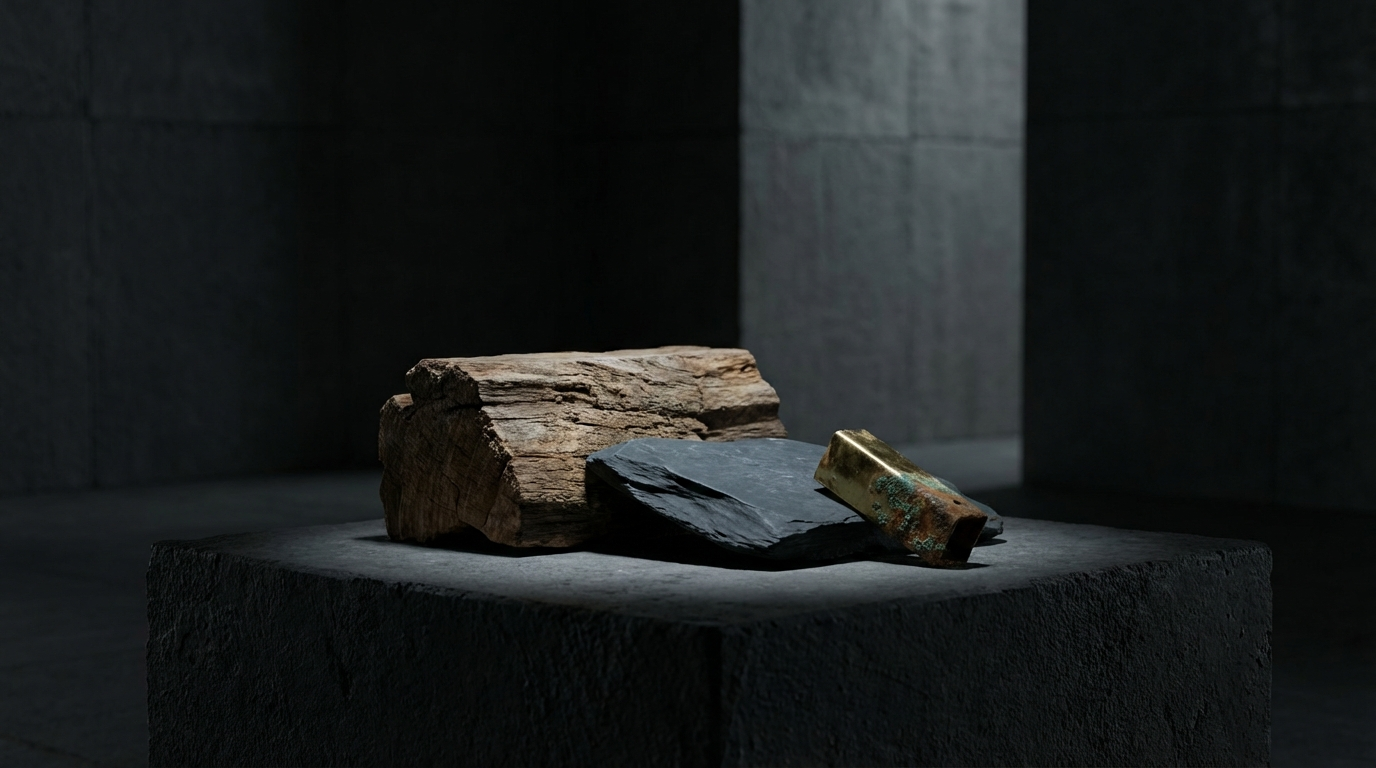
The resulting objects often possess a striking, uncompromisingly brutalist aesthetic, birthing a new category of 'brutalist luxury.' A monolithic stool sculpted from compressed industrial foam, discarded textiles, and natural resin might mimic the imposing weight, the cool touch, and the visual gravity of ancient, weathered stone. A massive, sculptural vessel cast from pulverized architectural debris and jagged glass shards might glisten in the light like a massive, unearthed geode, its rough exterior belying a complex, glittering interior. These pieces do not apologize for their origins; they do not attempt to masquerade as pristine marble or virgin wood. Instead, they command space with a heavy, grounded presence, offering a tactile roughness that challenges the traditionally smooth, frictionless surfaces of conventional luxury goods. They are objects that demand to be touched, to be felt, and to be reckoned with, grounding the user in the immediate, physical reality of the present moment.
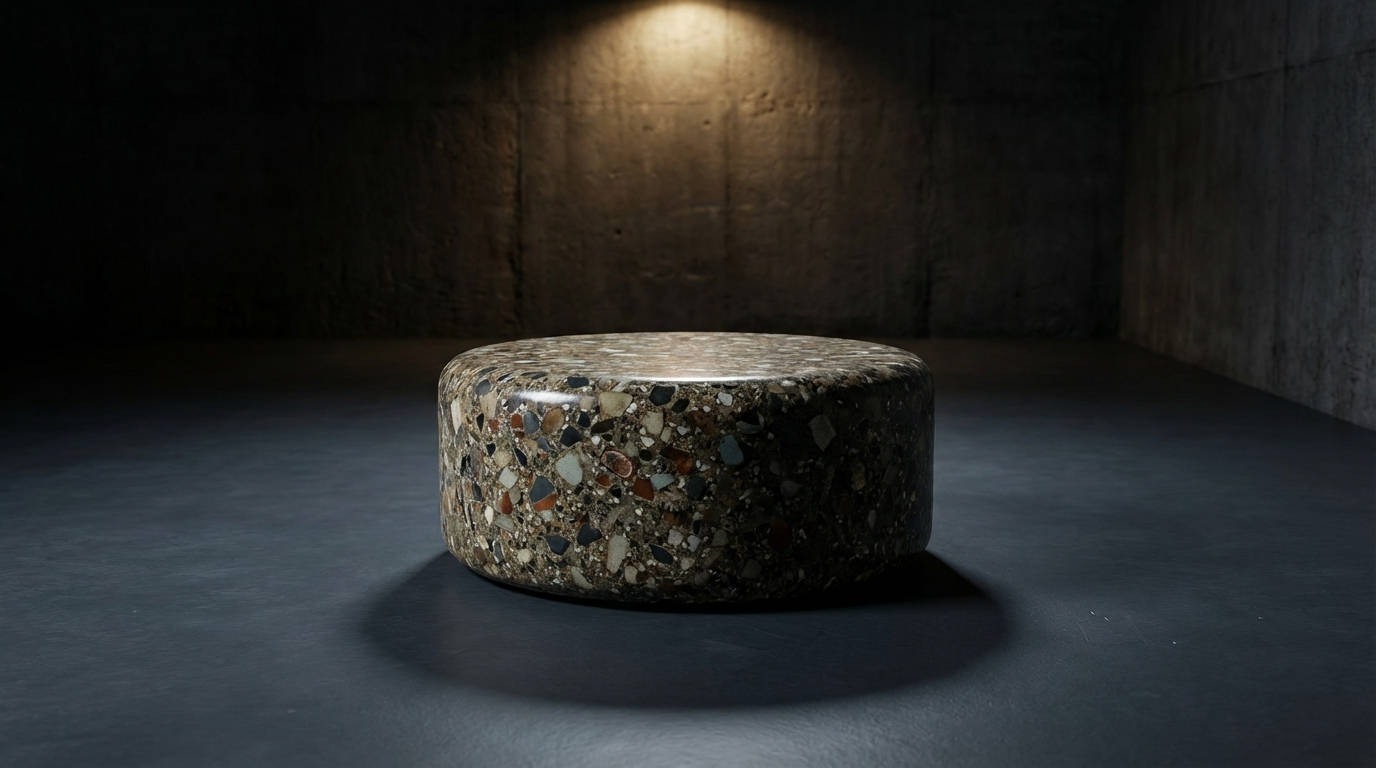
Crucially, the surfaces of these resurrected objects are rarely perfectly uniform. They are intentionally speckled with the spectral traces of their past lives, creating a rich tapestry of visual noise. The random, vibrant fleck of blue high-density polyethylene suspended in a muted grey matrix of crushed brick; the uneven, jagged aggregate of shattered windshield glass catching the afternoon light; the subtle, organic marbling of compressed coffee grounds—these are not flaws to be hidden, but vital characteristics to be celebrated. This visual noise is intentionally preserved and meticulously curated. It serves as a profound narrative texture, a physical testament to the material's arduous journey from initial utility, to subsequent waste, and finally, to its apotheosis as high art. It is a conceptual evolution of kintsugi, the Japanese art of repairing broken pottery with gold. However, instead of using precious metals to highlight the cracks in a singular object, these artisans are using the 'cracks' and fragments of our entire consumer culture to build something entirely new, finding inherent value in the brokenness itself.
Ultimately, this 'Alchemy of the Discarded' challenges the observer to radically recalibrate their entrenched perceptions of value, status, and beauty. It asks us to abandon our conditioned lust for the pristine and the scarce, and instead, to find profound beauty in the resurrected, the transformed, and the resilient. By treating society's garbage with the exact same reverence, meticulous care, and aesthetic ambition historically reserved for 24-karat gold or imperial porcelain, these emerging visionaries are democratizing the concept of luxury. They are powerfully demonstrating that the profound weight and the aura of an object do not emanate from the exorbitant price tag of its raw, extracted materials. Rather, true luxury emanates from the intensity of the human intention, the mastery of labor, and the uncompromising aesthetic vision applied to it. Luxury becomes an act of transformation rather than an act of mere acquisition.
In a contemporary world that is increasingly suffocating, quite literally drowning in the endless remnants of its own unchecked consumption, these crafted objects stand as vital, hopeful monuments. They are philosophical anchors in a sea of disposable commodities. They whisper a powerful, subversive truth: that there is no such thing as 'away' when we throw things away, but there is always the possibility of rebirth. By elevating the detritus of our daily lives into artifacts of breathtaking beauty and philosophical weight, these artisans are not just making furniture or sculpture; they are offering a profound commentary on the human condition. They prove, with every polished shard of glass and every compressed block of rubble, that even the most mundane, forsaken matter can be imbued with a quiet, enduring dignity, reminding us of the hidden nobility that resides within all things, waiting only for the right hands to reveal it.