The Cold Glow: Industrial Metal and the Warmth of Patina
23 March 2026
Modern artisans are transforming sterile industrial metals into soulful artifacts through brutal chemical alchemy. By forcing engineered alloys to decay, they pioneer a brutalist luxury that embraces wabi-sabi and the profound beauty of impermanence.
In the relentless, accelerating thrust of the 20th century, the architectural and domestic landscapes were fundamentally rewritten by the advent of industrial metallurgy. Materials such as aerospace-grade aluminum, surgical stainless steel, and titanium emerged not merely as pragmatic substrates, but as the defining ideological symbols of a new, hyper-rational era. Chosen explicitly for their clinical precision, their structural absolutism, and their militant resistance to decay, these metals represented the ultimate antithesis to the organic, evolving materials that had historically defined human craft. Traditional materials—wood that warps and breathes, bronze that verdigrises, clay that chips—speak inherently of the earth and its cycles. In stark contrast, modern industrial alloys were engineered to conquer nature. They do not rot, they do not rust, and they do not age gracefully; they exist in a state of suspended animation, perpetually, coldly new. They are the armor of the Anthropocene, reflecting a profound cultural hubris: the human desire to manufacture immortality.
Yet, within the rarefied echelons of contemporary craft, a quiet but radical subversion is taking place. A vanguard of modern metalsmiths and material philosophers is actively dismantling this paradigm of sterility. They are reclaiming these mass-produced, hyper-engineered materials and subjecting them to brutal, elemental interventions—chemical warfare and thermal trauma that force the unyielding alloys to age, to oxidize, and metaphorically to bleed. In doing so, they are breathing a warm, chaotic soul into the cold, monolithic expanse of industrial metal. This movement is not merely an aesthetic pivot; it is a profound philosophical statement. It champions the ethos of brutalist luxury, a concept that redefines high-end craft not through the lens of flawless, mirror-polished perfection, but through the profound, tactile narrative of survival, endurance, and deliberate imperfection.
This practice is a deliberate, almost visceral rejection of the frictionless surfaces that dominate our modern consumer landscape. The contemporary artisan begins their journey with stock shapes of industrial metal—perfectly extruded hollow tubes, laser-cut plates of exacting tolerance, or precisely machined blocks of solid billet. In their raw state, these forms are inherently devoid of narrative; they are blank slates of absolute geometry, born of algorithms and automated factories. They possess no history, no memory, no voice. To infuse them with what the Japanese call 'mono no aware'—the pathos of things, or the weight of time—the artist must relinquish the role of the precision engineer and embrace the mantle of the chaotic alchemist. Armed with specialized oxy-acetylene torches, volatile acid baths, caustic alkaline washes, and ancient burial techniques utilizing reactive salts and minerals, they launch a calculated attack on the pristine surface of the metal.
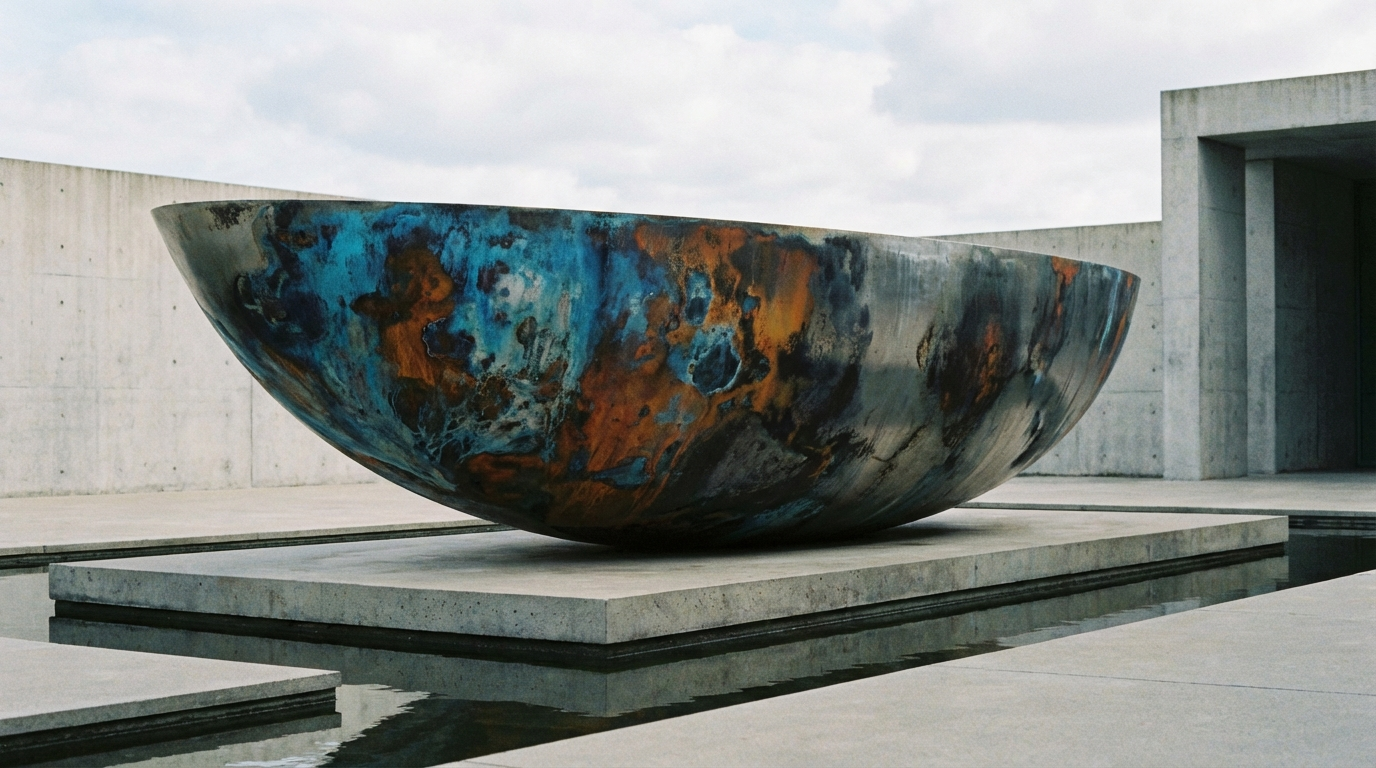
The reactions born of these interventions are violent, spectacular, and fundamentally unpredictable. Aluminum, normally a dull, utilitarian silver, can be coaxed through electrochemical anodizing and thermal shocking into blooming with iridescent, organic hues of oil-slick blue, burnt gold, and desolated ash grey. Stainless steel, a material explicitly formulated with chromium to resist oxidation and remain eternally unblemished, is subjected to extreme, localized heat until its very molecular surface alters. The heat introduces a profound trauma to the alloy, leaving permanent, indelible scars of deep bruised purple, iridescent magenta, and scorched, carbonized black. Titanium, the darling of aerospace engineering, is bathed in electricity and submerged in electrolytic fluids until its surface refracts light, creating ghostly, shifting spectrums that mimic the ethereal glow of a dying star.
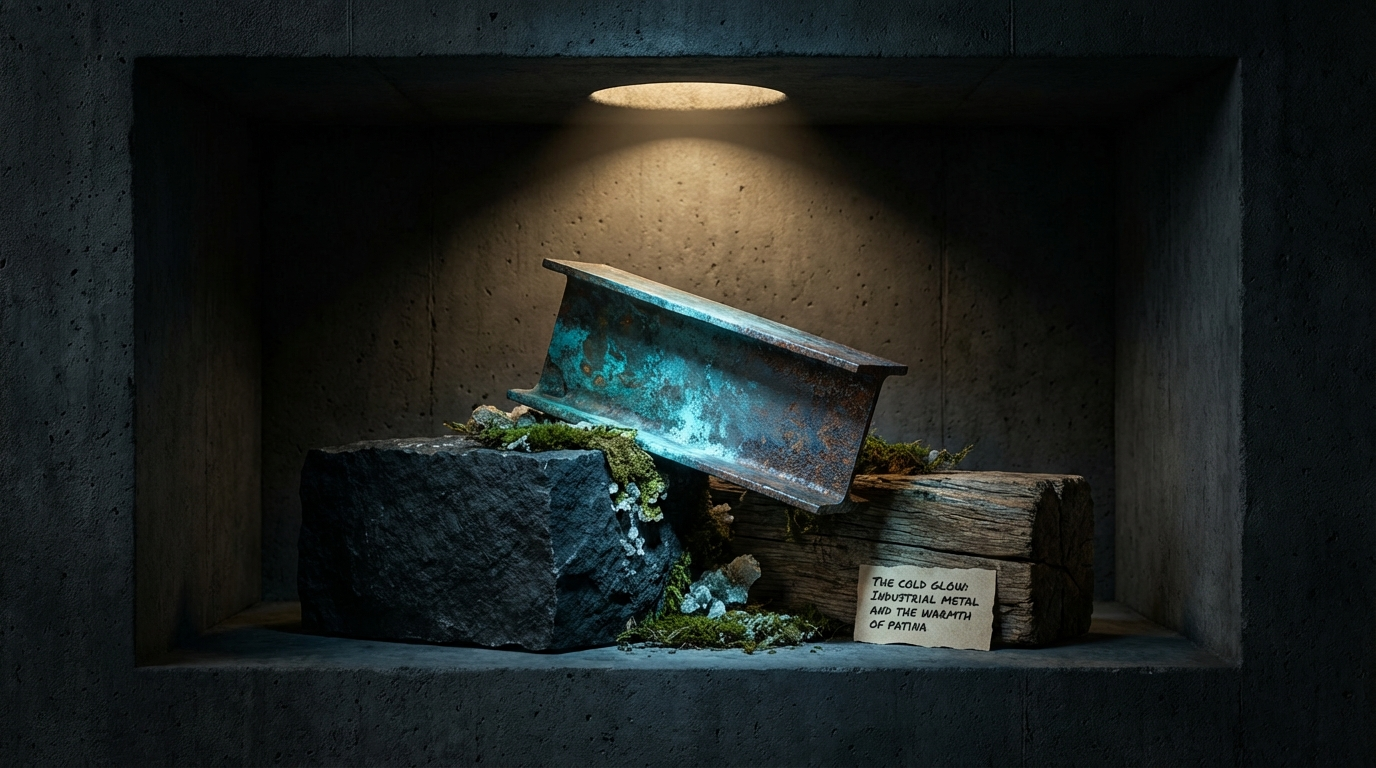
Crucially, in this alchemical theater, the artist does not possess total control over the final outcome. They can only set the parameters, mix the reagents, apply the heat, and guide the elemental forces. The chemical reaction ultimately follows its own organic, esoteric logic, creeping across the rigid geometric surface like a blooming lichen, a spreading bruise, or a satellite photograph of a river delta. The pristine, sterile industrial material is thus 'infected' with the chaotic whims of nature. This surrender of control is a vital component of the philosophy. It is an acknowledgment that true luxury cannot be entirely manufactured; it must be partially grown, allowed to evolve, and subjected to the serendipity of the universe.
The sublime beauty of these contemporary works lies in the immense, vibrating tension between the underlying structural form and the applied surface finish. It is a masterclass in the philosophy of Yin and Yang—the harmonious interplay of diametric opposites. The silhouette of the object remains razor-sharp, mathematically precise, a lasting testament to the triumph of industrial engineering and the masculine, ordering force of Yang. Yet, the skin of the object—the tactile, visual interface—is a chaotic, painterly landscape of chemical decay, embodying the fluid, receptive, and unpredictable nature of Yin. This forced patina bridges the chasm between the sterilized laboratory and the damp forest floor, between the logic of the machine and the poetry of the earth.
By introducing such radical degradation to these specific materials, the artisans are forging a new frontier for wabi-sabi—the ancient Japanese aesthetic philosophy centered on the acceptance of transience, asymmetry, and imperfection. It is relatively easy to recognize the wabi-sabi principle in a cracked raku teabowl or a weathered piece of driftwood; these materials are inherently fragile and eager to return to the soil. It requires a far more visionary leap to apply this philosophy to aerospace-grade alloys engineered specifically to defy entropy. This forced aging serves as a poignant, almost melancholy reminder to the viewer that even the most advanced, defiant human technologies are ultimately subject to the relentless entropic forces of the universe. Everything, eventually, decays.
In their studios, amid the acrid scent of sulfur and the blinding flash of the torch, these artisans are effectively collapsing time. They are compressing centuries of natural weathering into a matter of hours or days. The resulting objects exist in a paradoxical state of temporal suspension. They look simultaneously like sleek, futuristic prototypes salvaged from a distant, post-apocalyptic tomorrow, and ancient, excavated relics pulled from the ashes of a forgotten civilization. They transcend their utilitarian origins to become profound talismans of the modern age. Through their violent, beautiful alchemy, these artists transform the cold, sterile glow of industry into a warm, lingering meditation on impermanence, proving that even the most unyielding materials can be taught to feel the profound weight of time.