The Trajectory of Matter: Fire, Iron, and Time
23 March 2026
Forged in the violent crucible of fire, unyielding metals become silent monuments to time. This exploration of brutalist luxury and impermanence reveals how raw iron and brass forever bear the beautiful, rhythmic scars of their creation.
Of all the materials shaped by human hands, metal is unequivocally the most unyielding, the most heavily laden with the silent weight of geological epochs. Clay surrenders to the slightest pressure of a thumb, a wet, earthy compliance that invites immediate intimacy. Wood, though firm and resilient, can be coaxed, bent, and carved along its natural grain, offering a cooperative dialogue with the artisan's blade. But iron, brass, and bronze are entirely different entities. They are stubborn, rigid elements born in the suffocating, crushing heart of the earth, forged in the darkness of subterranean pressure over millennia. They are the very bones of the planet. Consequently, they refuse to be negotiated with on human terms. To change the form of metal, the artisan must subject it to an extreme, violent transformation. The craft of the blacksmith and the metalworker is not a peaceful, pastoral dialogue with nature; it is a brutal, physical wrestling match with matter itself, mediated by the intense, elemental, and devouring power of fire.
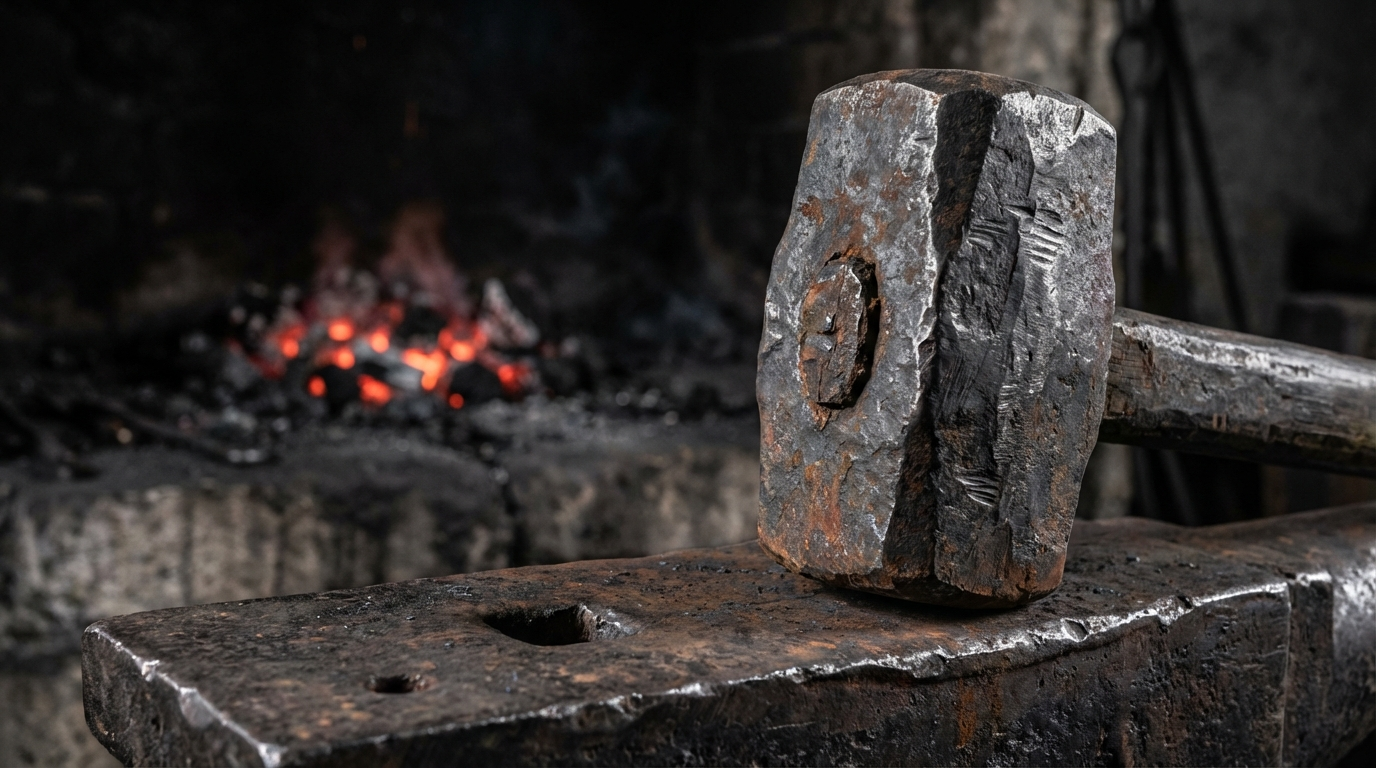
The process begins in the forge, a space that operates as a liminal threshold between creation and destruction. It is an environment of oppressive heat, acrid smoke, and deafening noise, a modern-day alchemical crucible where the fundamental laws of physics are pushed to their absolute limits. The cold, rigid metal is thrust into the roaring embers, fed by forced air until the core glows with a terrifying, incandescent light. In this superheated state, the metal briefly forgets its solid, terrestrial nature. It crosses a threshold, becoming pliant, luminous, and vulnerable. This is the precise moment of intervention. The artisan must strike while the iron is literally in a state of ontological flux. The heavy, rhythmic concussion of the hammer upon the anvil becomes the heartbeat of the craft, a primal drumbeat echoing through the soot-stained air.
With every devastating blow, the molecular structure of the metal is compressed, stretched, and violently forced into a new trajectory. This is an act of pure, unadulterated will. It represents a rapid, highly focused transfer of kinetic energy from the human body, traveling down the arm, through the wooden haft of the tool, and exploding into the glowing iron before it cools and hardens back into its unyielding, defensive state. Here, we witness the genesis of what might be termed brutalist luxury. True luxury, in this philosophical context, is not found in the superficial application of gold leaf or the sterile perfection of a machine-milled surface. Rather, it is found in the sheer, staggering expenditure of human energy, the unapologetic rawness of the material, and the physical manifestation of a struggle between flesh and earth. It is luxury derived from authenticity, weight, and the visceral truth of the object's making.
Yet, for all this elemental violence, the philosophy underpinning contemporary, high-end metalwork is one of profound restraint, deep humility, and a reverent respect for the material's innate character. This approach is deeply rooted in the philosophical tenets of wabi-sabi—an aesthetic and spiritual paradigm that finds beauty in the imperfect, the impermanent, and the incomplete. The goal of the master artisan is never to force the metal into highly polished, artificially pristine shapes that deny their fiery, chaotic birth. To erase the marks of the hammer is to erase the memory of the forge; it is an act of deceit. Instead, the artisan seeks to preserve the trajectory of matter—the visible, tactile record of the object's violent creation.
Consequently, the surface of the vessel or sculpture is deliberately left raw, bearing the rhythmic, overlapping scars of the hammer's impact. These facets catch the light not with the blinding glare of a mirror, but with the soft, diffused glow of a twilight landscape. The edges may be slightly uneven, undulating with the organic rhythm of the human hand rather than the cold, dead precision of a computer-guided machine. This deliberate imperfection is a manifestation of the yin-yang philosophy, where the aggressive, masculine energy of the hammer (yang) is perfectly balanced by the yielding, receptive nature of the heated metal (yin). The resulting object is a harmonious synthesis of these opposing forces, a physical embodiment of dynamic equilibrium frozen in time.
More importantly, the philosophical artisan embraces the relentless, inevitable passage of time. In the realm of brutalist luxury, age is not a flaw to be prevented; it is a vital component of the material's narrative. Rather than sealing the metal behind a glossy, synthetic protective coat that arrests its aging process and suffocates its spirit, the surface is often left entirely naked, or gently oxidized and chemically treated to accelerate a natural, organic patina. The metal is allowed to breathe. The iron is permitted to darken into shades of charcoal and rust, the brass to tarnish into deep, muted golds, olive greens, and earthy browns. Bronze may bloom with a powdery verdigris, a testament to its slow, invisible dialogue with the atmosphere.
This patina is the metal's memory. It is a visual ledger of its existence in the world. It acknowledges the profound truth of impermanence: that an object is never truly finished when it leaves the anvil. It continues to evolve, constantly reacting to the oxygen in the air, the ambient humidity of the room, the microscopic salts and oils from human skin upon being touched, and the slow, inexorable creep of decades. To polish away this patina would be to erase the object's lived experience. The high-end collector of such craft understands that they are not merely purchasing a static decorative item; they are entering into a long-term relationship with a living, evolving entity. The object becomes a silent witness to the life of its owner, absorbing their touch and reflecting the shared passage of their days.
To fully appreciate this caliber of metalwork is to appreciate the brutal, unyielding poetry of its forging, and the quiet, melancholic dignity of its inevitable, slow decay. It is an aesthetic that demands contemplation and a willingness to confront the heavy reality of our own ephemeral nature. In a modern world obsessed with the flawless, the disposable, and the digital, these raw, heavy, hammer-scarred artifacts ground us in the physical realm. They remind us of the primordial forces of fire and earth, of the sweat and muscle of the artisan, and of the inescapable current of time that sweeps us all forward.
Ultimately, these forged creations stand as heavy, silent monuments to the enduring weight of time itself. They teach us that true beauty does not reside in an artificial, frozen state of perfection, but in the graceful acceptance of change, oxidation, and eventual dissolution. The trajectory of matter is a circle, beginning in the dark ores of the earth and, over centuries of slow rust and decay, eventually returning to it. The artisan merely interrupts this ancient cycle for a brief, glorious moment, using fire and iron to capture a fleeting spark of human intention before the metal continues on its long, inevitable journey back into the dust.