Obangsaek: The Quiet Balance of the Cosmos
23 March 2026
True luxury lies in elemental equilibrium, not excess. By translating the ancient cosmology of Obangsaek into raw materials and brutalist textures, modern craft transforms everyday objects into resonant vessels of cosmic harmony.
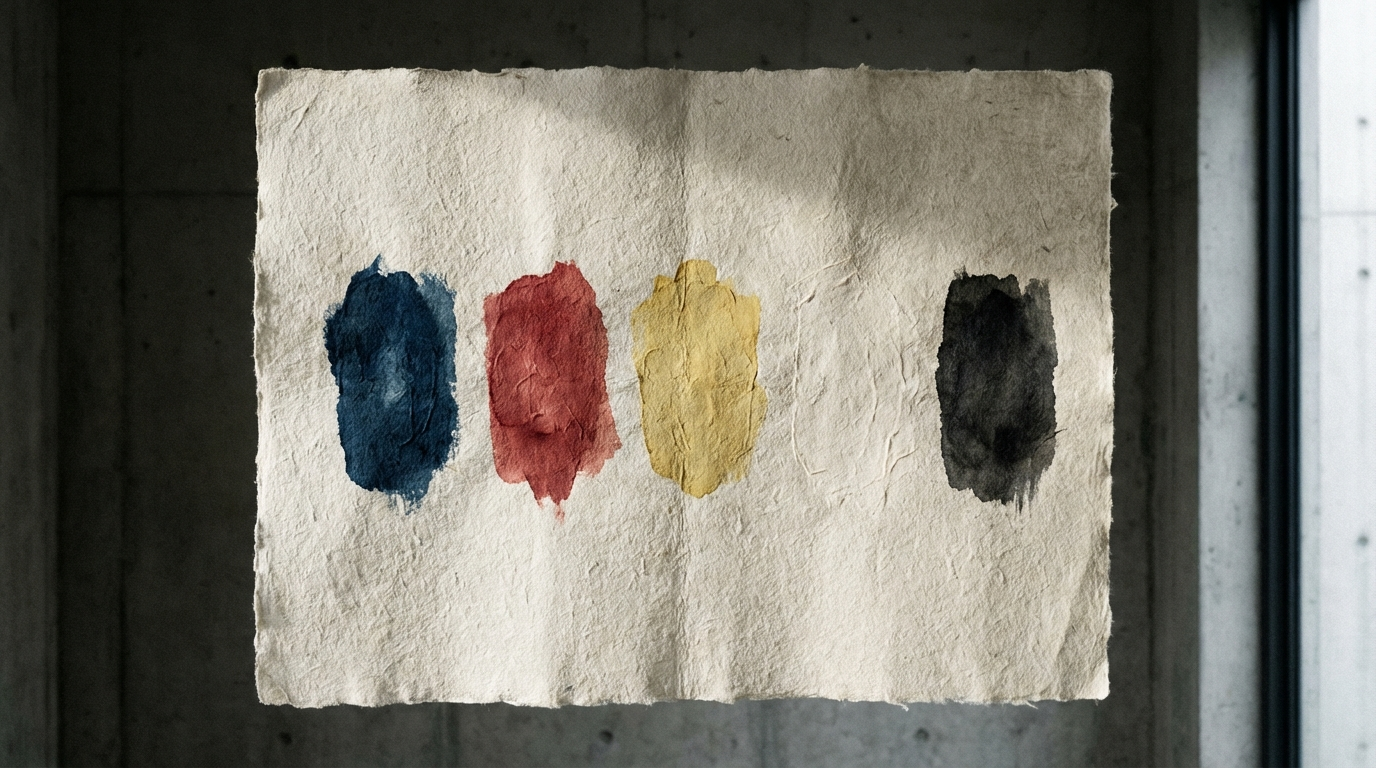
Before color was reduced to a mere aesthetic choice—a fleeting matter of personal preference or the transient whim of seasonal trends—it was a profound cosmological map. In the crucible of ancient Eastern thought, particularly within the traditional Korean philosophical landscape, color was not merely seen; it was felt, read, and utilized as a sacred language. It was the vital lexicon used to navigate the physical and spiritual worlds, to maintain somatic health, and to decode the vast, silent machinations of the universe. At the very heart of this ancient metaphysical system lies Obangsaek, the spectrum of the Five Directional Colors: Blue representing the East, Red signifying the South, Yellow anchoring the Center, White embodying the West, and Black guarding the North. Rooted deeply in the primordial philosophy of Yin and Yang and the Five Elements—Wood, Fire, Earth, Metal, and Water—Obangsaek is not a palette in the contemporary sense. It is a visual manifestation of absolute, cosmic balance, a geometric and spiritual grid laid over the chaos of existence to bring forth order, meaning, and harmony.
In historical antiquity, these five colors permeated every conceivable aspect of life, acting as both shield and conduit. They were woven into the vivid, rhythmic stripes of a child's 'saekdong' garment, where the bright bands of silk were believed to possess the energetic frequency required to ward off malevolent spirits and invite longevity. They dictated the intricate, geometric 'dancheong' patterns painted with painstaking devotion on the eaves of wooden temples and grand palaces. This was not mere decoration; the crushed mineral pigments served a dual purpose, protecting the vulnerable timber from the decay of rot and insects while simultaneously elevating the architecture into a realm of divine resonance. They even guided the meticulous arrangement of ingredients in traditional cuisine, ensuring that every meal provided a harmonious balance of elemental energies to the body, mirroring the macrocosm of the universe within the microcosm of the human form. To utilize Obangsaek was to align oneself with the rhythmic, cyclical breathing of the seasons and the cardinal directions, acknowledging humanity's fragile yet essential place within the vast, interconnected web of the cosmos.
However, in the context of contemporary, high-end craft and the minimalist ethos of modern luxury, the interpretation of Obangsaek undergoes a quiet, profound evolution. The vibrant, saturated hues of the past—the literal reds of cinnabar and the piercing blues of azurite—are deliberately stripped of their loud, declarative volume. We have entered an era of brutalist luxury, where the superficial is burned away to reveal the structural and spiritual truth beneath. Instead of literal pigment, we look to the spiritual essence behind the colors: the concept of equilibrium. Contemporary artisans may not paint their works in the traditional five hues, but they channel the enduring philosophy of Obangsaek by meticulously balancing the elemental forces within their chosen materials. They engage in a silent alchemy, translating the ancient colors into the language of texture, weight, and material honesty.
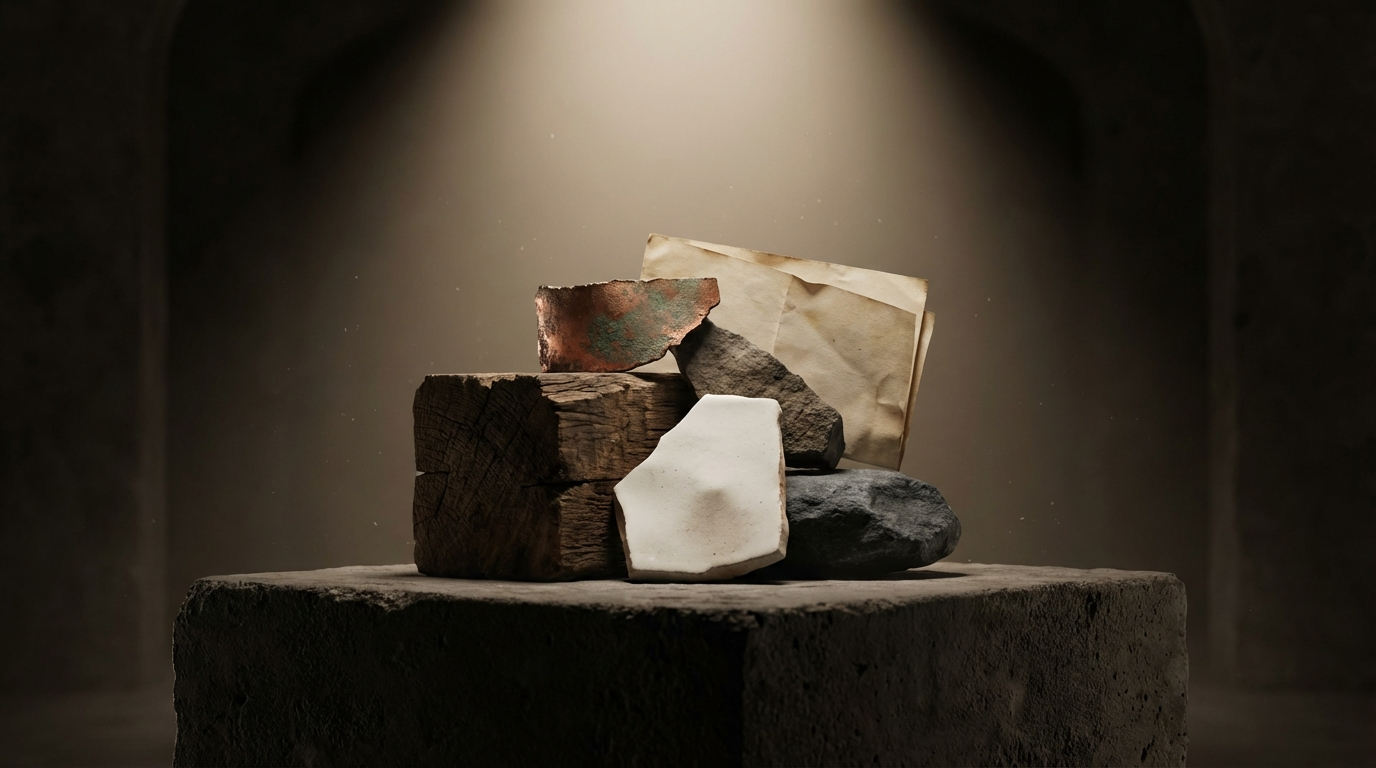
In this elevated material vocabulary, the 'Black' of the North—associated with Water and the deep, silent winter—is found in the light-absorbing void of charred wood, achieved through ancient fire-treating techniques that speak to the beauty of destruction and preservation. It is the deep, mirror-like abyss of aged lacquer, built up in imperceptible layers over months, trapping time itself within its dark sheen. The 'White' of the West—symbolizing Metal and the crispness of autumn—is present in the unglazed, porous surface of white porcelain or the chalky, austere finish of raw plaster. It speaks of purity, of stripping away the unnecessary, echoing the Japanese concept of wabi-sabi where beauty is found in the austere, the unadorned, and the beautifully imperfect. The 'Yellow' of the Center—the Earth, the grounding force of late summer—is felt in the raw, tactile texture of the clay itself, unmasked by heavy glazes, celebrating the gritty, honest reality of the soil from which we all originate. The 'Blue' of the East and the 'Red' of the South manifest not as pigment, but as the vitality of the maker's hand and the transformative heat of the kiln—the Wood and the Fire that shape the final form.
This approach to Obangsaek is deeply intertwined with a reverence for impermanence. The materials chosen in high-end philosophical craft are those that age, that weather, that record the passage of time. A bronze vessel that slowly oxidizes, a wooden table that darkens with human touch, a ceramic bowl bearing the scars of the fire—these are objects that breathe. They embody the dynamic, ever-shifting relationship of Yin and Yang. True luxury is found in the acceptance that nothing is finished, nothing is perfect, and nothing lasts forever. By embracing the raw, elemental states of wood, fire, earth, metal, and water, we invite the philosophy of Obangsaek into our spaces not as static decoration, but as a living dialogue. The brutalist edge of a hand-forged iron sculpture does not exist in isolation; it requires the soft, yielding warmth of a woven textile or the quiet emptiness of the surrounding room to find its ultimate meaning.
This brings us to the most vital, yet invisible, component of this cosmological balance: the space between. In traditional Eastern aesthetics, the concept of emptiness—often referred to as 'yeobaek' in Korean or 'ma' in Japanese—is not a void to be filled, but a profound substance in its own right. Obangsaek teaches us that the center is the anchor, but it is the space around the object that allows the energies of the four directions to flow. When an artisan crafts a piece with absolute material honesty, they are also crafting the emptiness that will surround it. The unyielding, cold edge of a stone basin is defined by the ephemeral, fleeting nature of the water it holds, just as the silence of a room is defined by the objects placed within it. This tension of opposites, this flawless orchestration of presence and absence, is the zenith of luxury craft. It is a rejection of modern excess, a refusal to overwhelm the senses with gratuitous adornment.
By deeply understanding the philosophical underpinnings of Obangsaek, we come to realize that true luxury in the realm of craft is not a matter of opulence or excess, but of achieving a flawless, almost agonizing tension of opposites. It is the delicate balance between the warm, organic, unpredictable grain of ancient wood and the cold, unyielding, absolute edge of forged iron. It is the profound harmony between the physical space an object occupies and the charged emptiness it leaves behind. When a master artisan achieves this sacred balance, the resulting object ceases to be merely a functional tool or a decorative accessory. It transcends its physical boundaries, vibrating with the silent, underlying frequency of the universe itself. It becomes a timeless artifact, a physical manifestation of ancient cosmology, quietly whispering the eternal truth that true, enduring beauty is found only when all elements—material and spiritual, light and dark, presence and void—exist in perfect, quiet harmony.